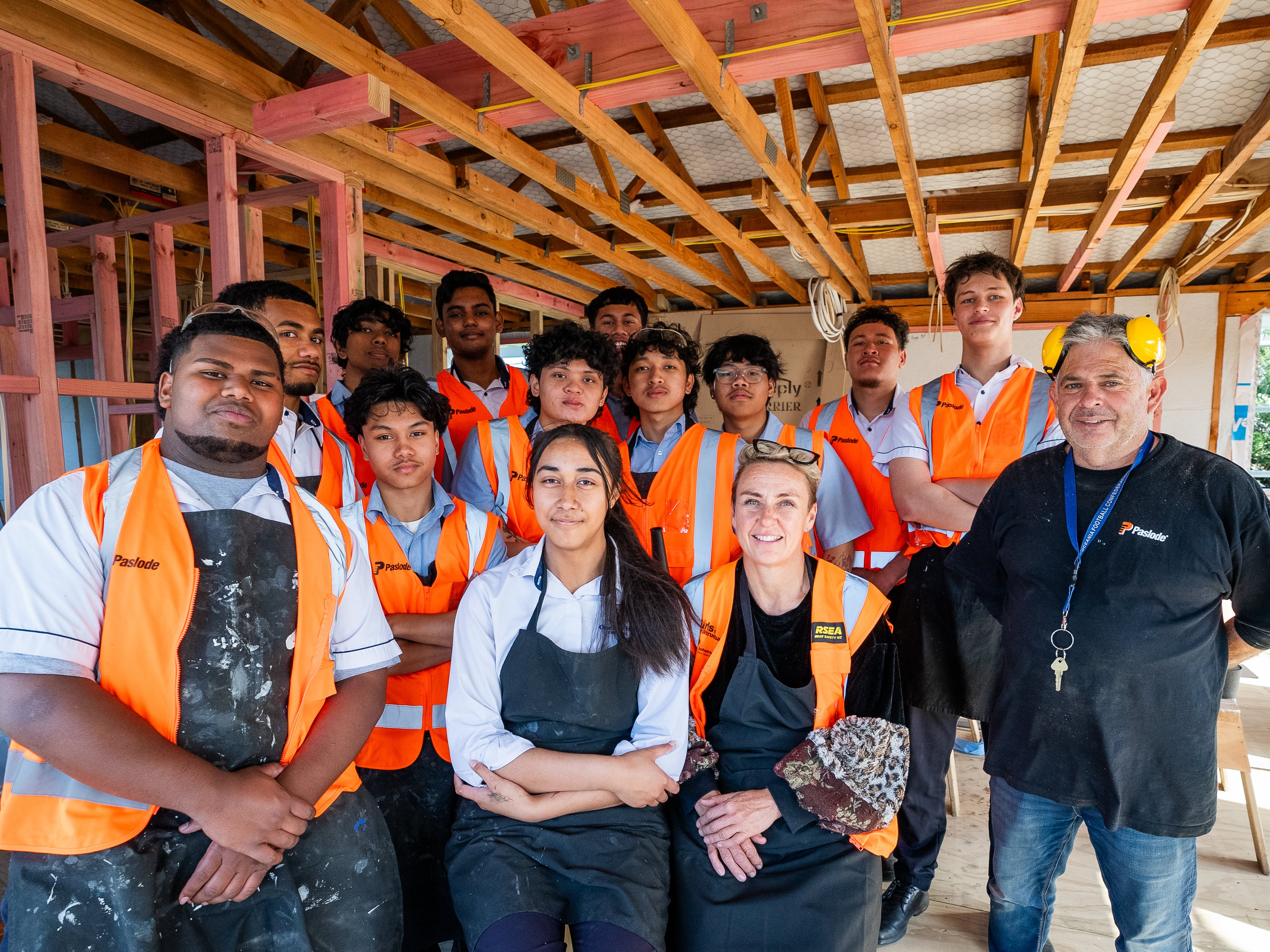
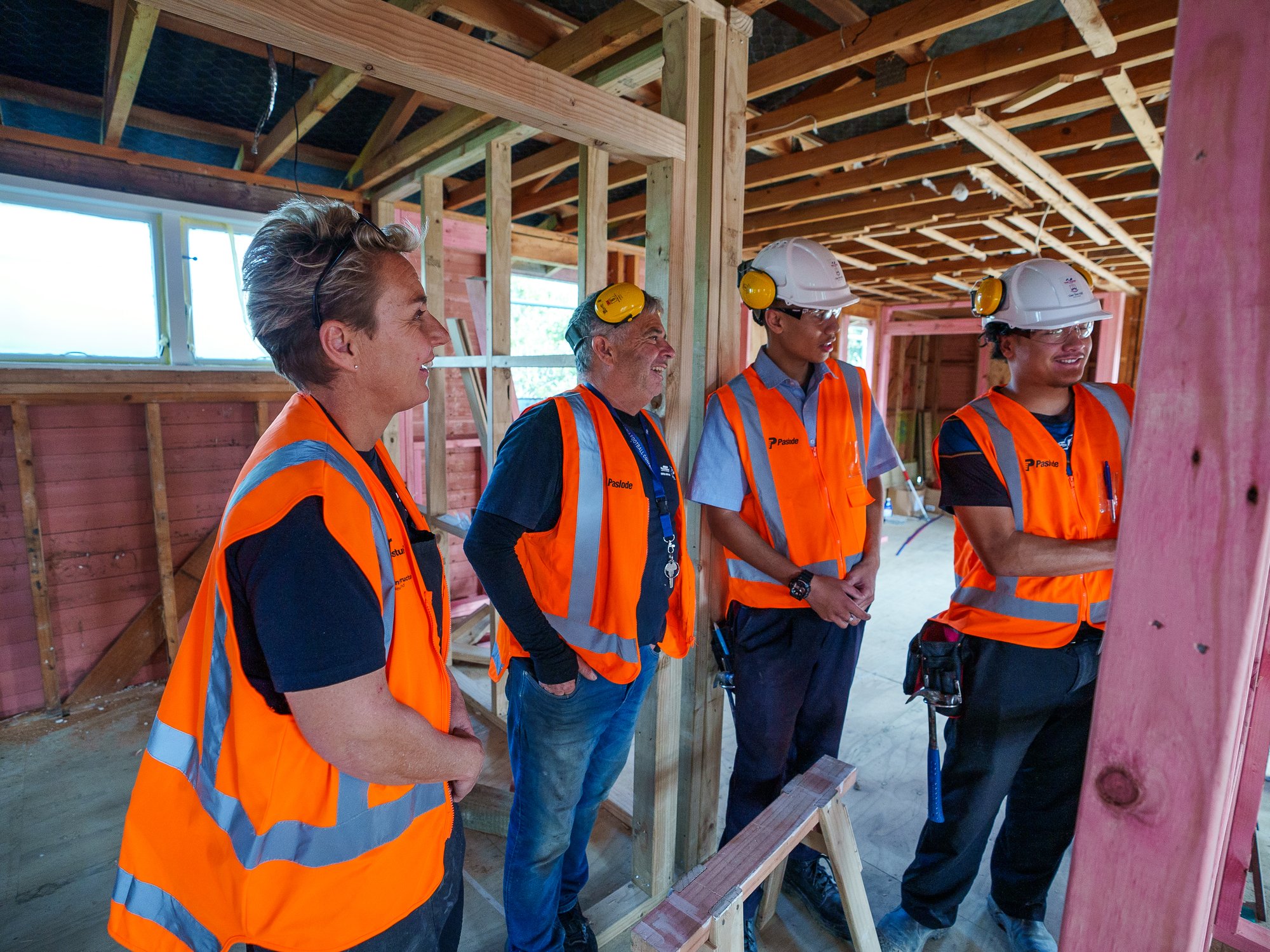
A dynamic project for trade students at an Auckland high school is making waves in the sustainable housing space.
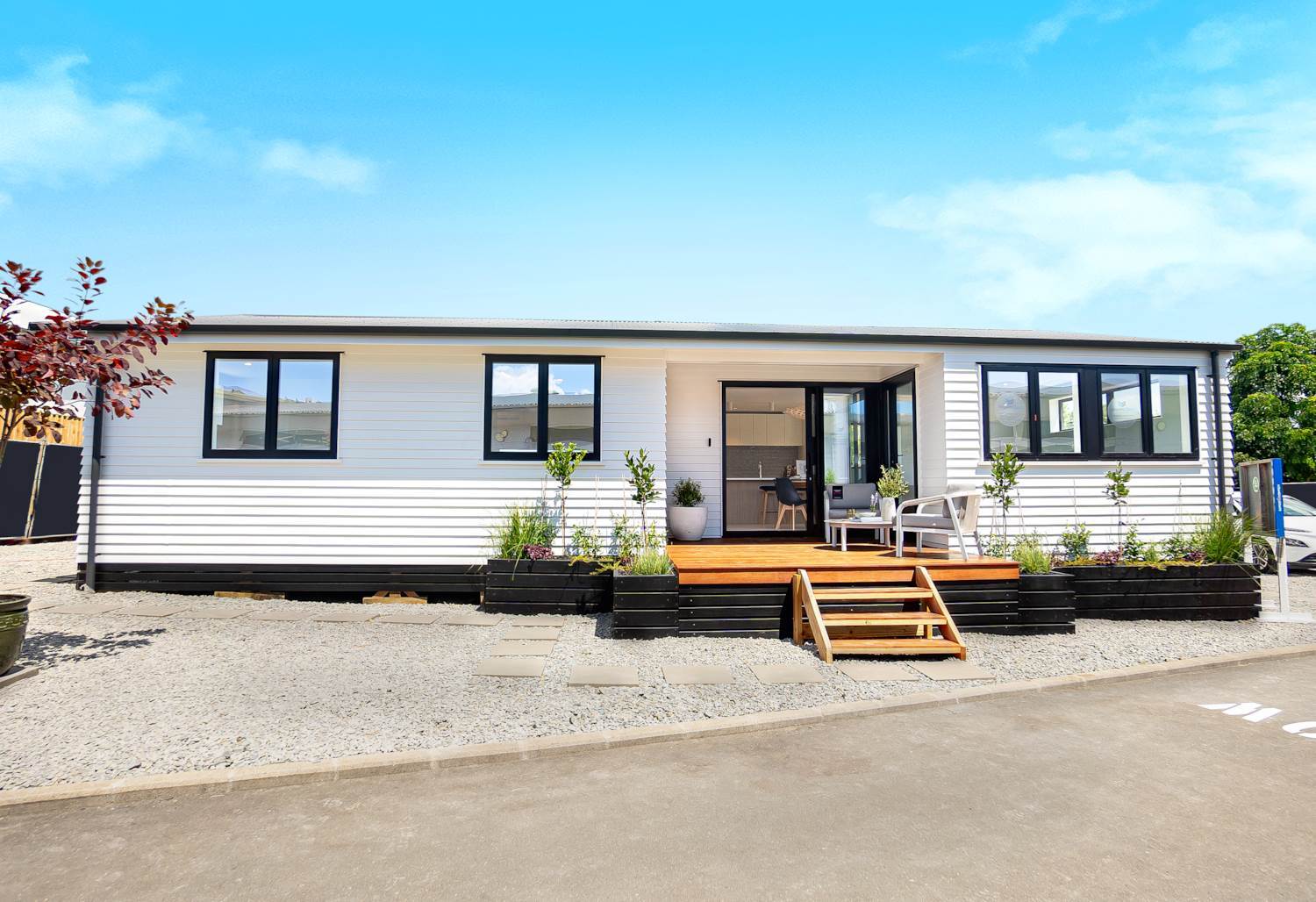
Learning, hope and change are central to the 7 Homestar rated revival of a rundown 1970s former state house.
Essentials
Name: Ex-Kāinga Ora $1.00 House
Where: One Tree Hill College Trade Academy, Tāmaki Makaurau
Project: sustainable retrofit of an end-of-life 1970s Kāinga Ora - Homes and Communities house
House: $1 price tag; destined for landfill; 100 square metres; 3 bedrooms, one bathroom; weatherboard; roof on, closed in, pre-removal of asbestos; solid built form
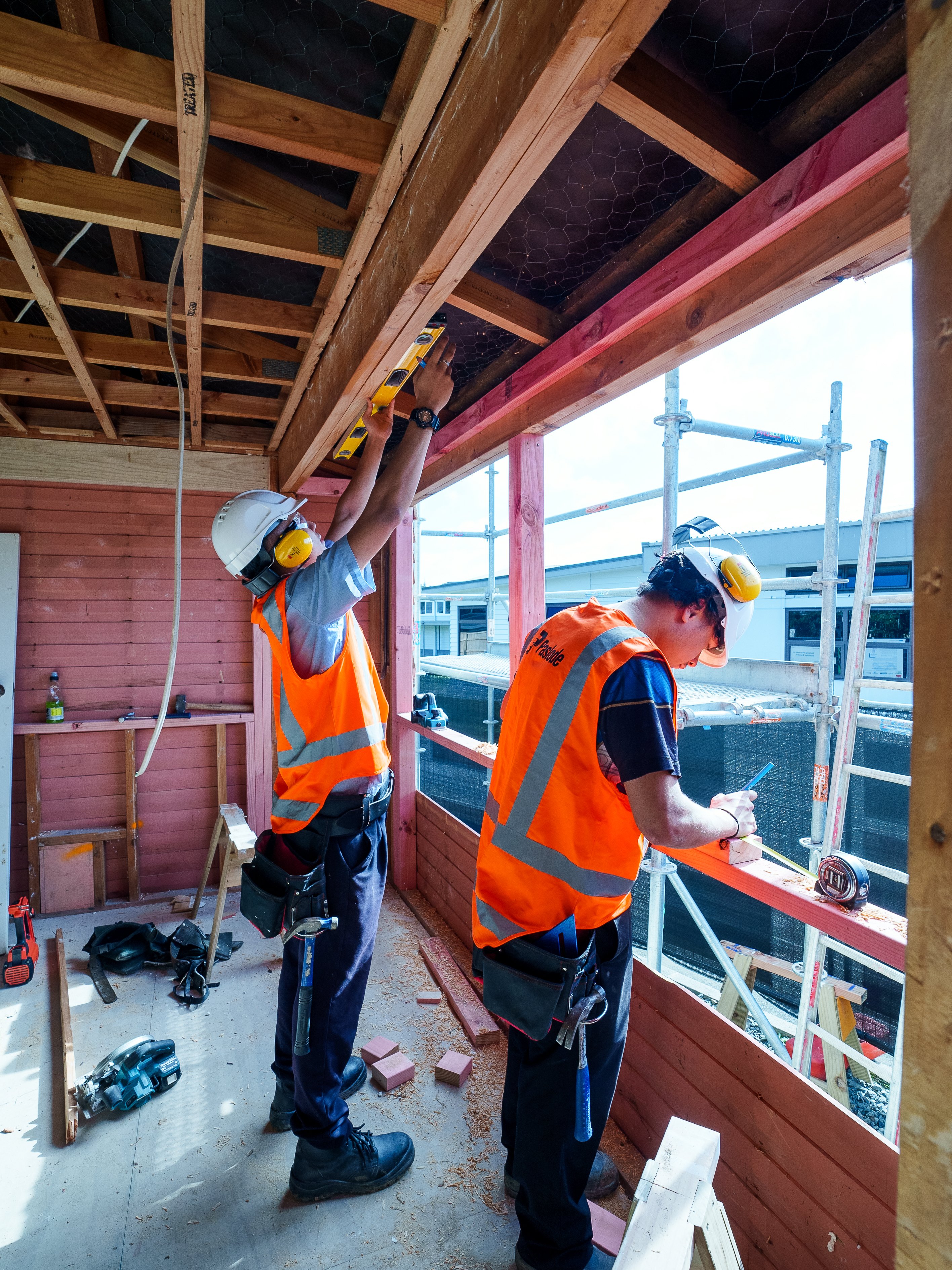
Aim: to provide a living classroom; to elevate student learning beyond a traditional workshop setting; to provide advanced hands-on trades experience with sustainability centre stage
Funding: over $300,000 worth of building materials donated by suppliers and construction companies
Workforce: 20 students; Year 13 Building and Construction Industry Training Organisation (BCITO) level 3 programme; additional labour support from BCITO level 2 students
Project Snapshot
Project leadership: Charlotte McKeon, Teacher in Charge of Trade, One Tree Hill College
Homestar professional: Sarah Elicker, Gracely Ltd
Timeframe: house transported from Mangere to school site May 2024; completion February 2025; public auction of completed house (sold for $250,000) April 2025; now a family home in South Auckland
Project certification: 7 Homestar design rating version 5 (July 2025)
When Head of Trade at One Tree Hill College and fifth year Masters of Architecture student at the University of Auckland, Charlotte McKeon, heard about Homestar in a lecture it was a lightbulb moment.
“I listened and thought ‘Why wouldn’t we be doing this?’”
The mastermind behind a dynamic living classroom – the Ex-Kāinga Ora $1.00 House project – Charlotte is a powerhouse advocate for affordable, better quality housing in Aotearoa.
Homestar was on her wavelength - the tool would drive her students’ deep retrofit of a dilapidated ex-KO house moved onto the grounds of One Tree Hill College.
“Through my architectural studies I’ve learned we don’t have to keep building as we are. The change doesn’t have to be radical – we just need to adjust specific materials, methods and techniques to achieve higher performing results within our built environment,” says Charlotte.
“I’m passionate because so many of us, myself included, live in substandard homes which are expensive to run and don’t provide children with healthy homes.”
Charlotte says while targeting any Homestar rating “seemed unattainable for an end-of-life house” as the project snowballed the challenge of 7 stars - higher than the 6 Homestar rating required by the government, at the time, for community housing - fuelled big ambitions.
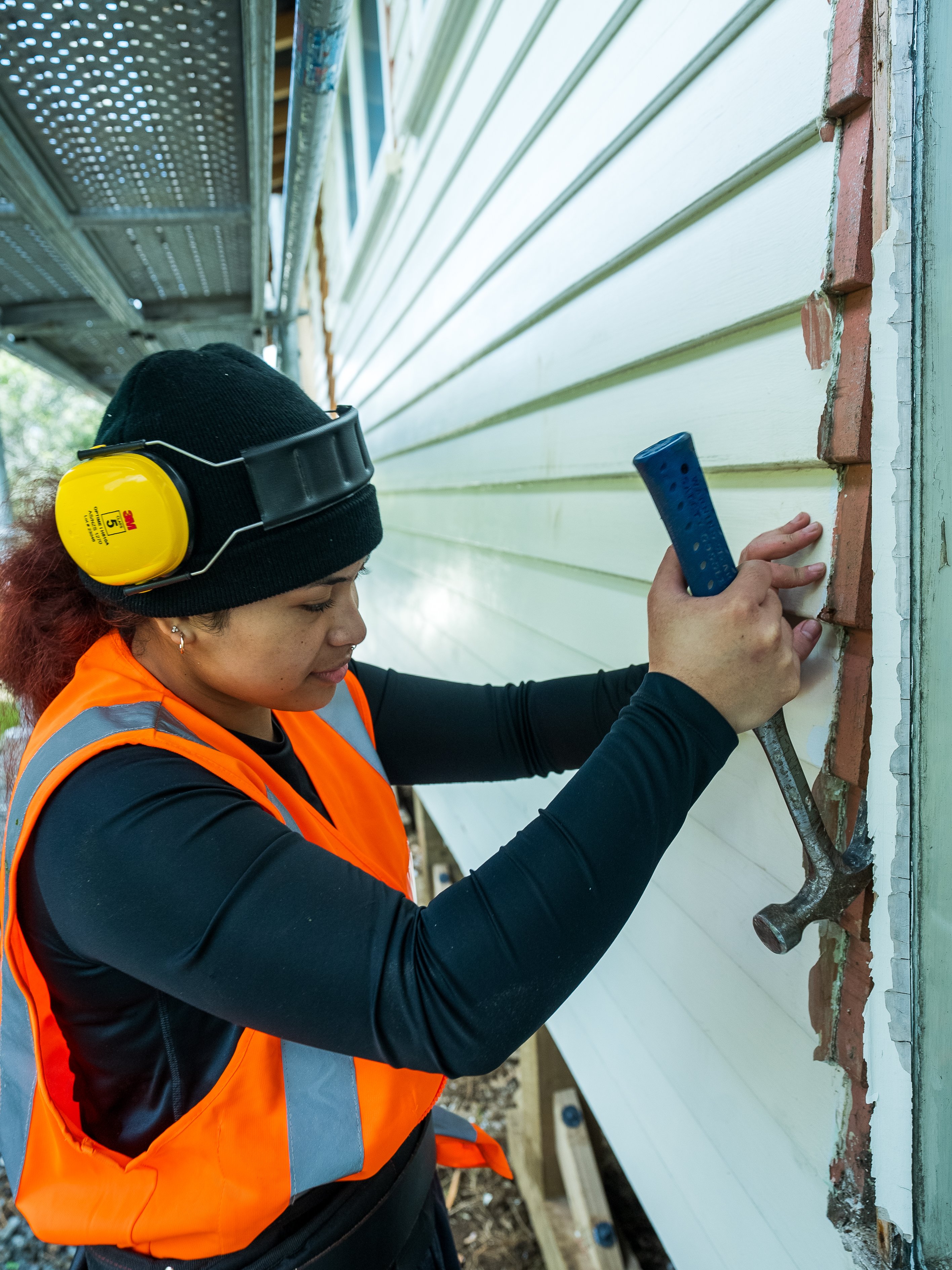
“We wanted to demonstrate in a very real way we can build better in this country and furthermore to prove that the mahi of a group of students could signpost what’s possible in residential building in Aotearoa,” says Charlotte.
“Pre-retrofit it would have been impossible for a family living in the house to keep it warm despite it having heaters and insulations in the roof and under floor.”
Homestar assessor, Sarah Elicker says the project’s energy modelling and early adoption of Homestar translated into a highly energy efficient, healthy and comfortable built-form.
The house was gutted and converted into an open plan, modern home.
Sustainable features included:
-
better performing upgraded envelope – less hot air heat loss in winter; less overheating in summer
-
whole house continuous mechanical ventilation; the heat from the exhausted stale air is ‘recovered’ to pre-warm the incoming fresh air
-
ducted heat pump; all rooms able to be heated or cooled at the same temperature rather than a wall mounted heat pump only heating/cooling the room in which it’s installed
-
energy efficient appliances and light fittings
“This was such an inspirational project and a special team to work with. The students were super-talented and public support for the project was immense,” says Sarah.
.jpg?width=1500&height=1028&name=7wz7w%20(2).jpg)
Charlotte says the KO House project’s biggest triumphs include:
-
equipping students with an understanding of the difference between traditional building versus Homestar/sustainable construction
-
authentic learning with measured outcomes
-
seeing career pathways
-
propelling successful transiting from school into trade apprenticeships
“At least eight of our students signed differing apprenticeships at graduation last year plus we’ve had students going into pre-apprenticeship courses,” says Charlotte.
NZGBC Impact Manager- Residential, Matthew Cutler, says programmes like the KO House project are an effective vehicle for encouraging young people to experience the multifaceted benefits of apprenticeships.
“The number of students pursuing trade and vocational training is still a fraction of those choosing tertiary education - reflecting a strong cultural bias towards university degrees being more desirable than a trade. We need to do a much better job of encouraging young people to engage with a trade,” he says.
“We're currently in a construction slump but history suggests in a few years time we'll be crying out for builders and tradespeople as happened three or four years ago. Now is the time to be starting young people on the apprenticeship journey.”
.jpg?width=1500&height=1028&name=7wz83%20(1).jpg)
Matthew says trade apprenticeships:
-
are a pathway to earn while you learn
-
provide opportunities to travel and work
-
are a great option for growing a successful business
The big-scale success story of the ex KO House project has now inspired a new mission for the One Tree College Trade Academy – the revival of a 30 year old Keith Hay house.
Charlotte says using the same formula the project will target:
-
a 7 Homestar rating
-
net zero outcome
-
solar power to run the house and charge a vehicle
“The students inspire these projects and are the reason they happen. Learnings will be transferred and many of the same products from our first house are on hand - waterproofing systems, insulation and eco-barrier materials – to achieve a tight thermal envelope.”
Name: Keith Hay Style $1.00 House
House: $1 price tag; destined for landfill; 74 square metres, three bedrooms and one bathroom; Hardie Plank; solid structure; truss roof providing easy ‘opening up’; now positioned on-site at the school
Students: 19 Year 13 level 3 BCITO programme plus supporting students
Funding: money raised from auction of KO House channelled into the second project
Timeframe: house transported to school site February 2026, estimated completion September 2026; house likely to become a rental property for teachers; community location
Charlotte says the two retrofit projects reflect a rollercoaster of sustainable thinking and actions.
“By bringing together students, teachers, specialists, experienced people, listening, questioning and connecting the dots. This is how we can all do better by working for a common goal of better housing in this country.”