
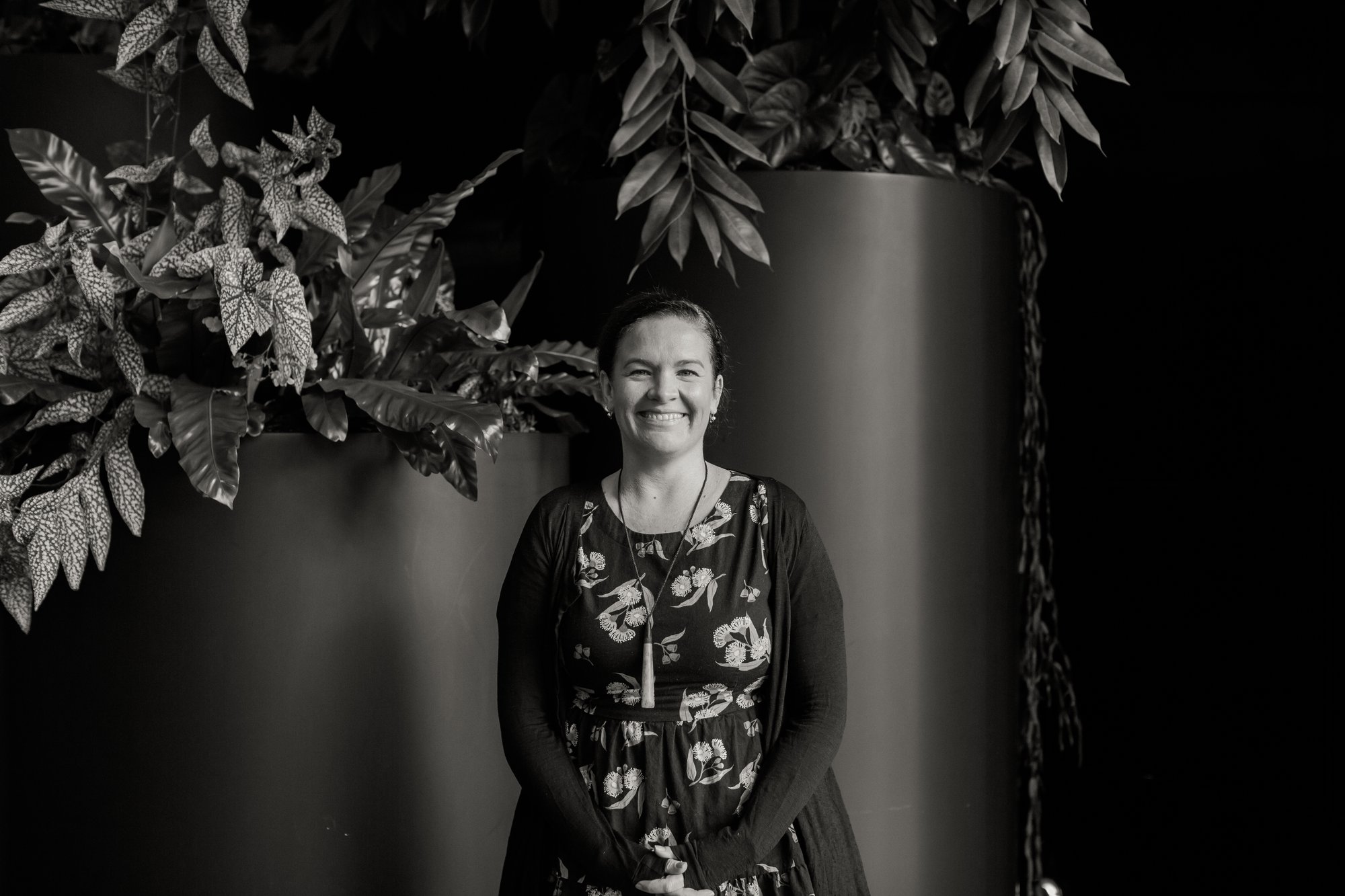
Our Movers and Shakers series spotlights Aotearoa's leading sustainability professionals transforming the way we design, build and operate our buildings and homes. Today we have a special profile of a veteran advocate for sustainable buildings.
Lisa Hinde
Three years ago leading Australian sustainability consultant, Lisa Hinde, crossed the Tasman to take up the role of Precinct Properties Head of Sustainability in Aotearoa. With strong connections to the Green Building Council of Australia and the NZGBC she’s helping to reframe our property sector’s approach to green building and ESG technology solutions.
What motivated you to study a Master in Sustainable Built Environment at the University of New South Wales?
I graduated from uni with a Bachelor of Business Management during the opportune time of the global financial crisis! As a result I took the first job I could get as a team assistant in an engineering consultancy. After a few years following the engineers around, I found I enjoyed the ESD side of projects but knew I needed higher education in the field – hence the Masters! The cross section of engineering, architecture and practical coursework really appealed.
My career has all been very much unplanned - however I’m grateful for that early intervention because I don’t know whether I would have had the same exposure to this field of work or the direction to my current career.
Was a career in the property industry underpinned by green building advocacy always your desired pathway?
No. I wanted to travel the world managing rock bands! However what I realised during that early exposure to the property industry was that I’d found an unexpected opportunity to practice my values of sustainability and community in a profession. It’s a dream to work in an exciting and innovative industry which also allows me to acknowledge those core principles I hold close.
You’ve had high profile roles in the sustainability space in Australia and worked on some complex, green projects over there – what enticed you to Aotearoa?
Aotearoa is an exciting sandbox of innovation with a considerably flatter bureaucratic structure. There is so much untapped potential to leapfrog complexity in pursuit of new and exciting concepts in the built environment and bring these to life - far sooner than Australia.
However, the highlight for me so far has definitely been understanding more about mana whenua and working to deepen my appreciation of culture in the built environment. The tramping isn’t too bad either!
Any insights from the Australian built-environment sector you’re leveraging here?
I’d really like to support stronger action for tracking and managing waste, water efficiency and indoor environment in operational buildings. We’re reasonably good at the energy equation here in Aotearoa - but the broader picture is often overlooked.
As a Queenslander where droughts are common - the water efficiency aspect is particularly front of mind. Also mandatory NABERS energy ratings were a gamechanger for reducing energy consumption in buildings in Australia when they were introduced in 2010. It would be great to see that happen here with NABERSNZ.
Likewise do we have anything to teach Australia in the green space?
Absolutely! The work completed on green finance, upfront carbon, electrification, EVs, bidirectional charging, climate adaptation and Māori and Pasifika engagement is second to none.
I have enjoyed observing the impact that good initiatives can have that don’t necessarily have a tie into corporate reporting. In Australia, whilst helpful, we do often rely on a checklist to tell us what to prioritise. Here it feels far more organic and meaningful.
A few years ago you mentioned New Zealand was heading for “a sustainability bonanza.” How are we tracking?
I think we’re heading into a stronger period of recognising sustainability by its true descriptors - ‘resilience’ and ‘value creation’. At its core, sustainability is about reducing operational costs, shielding a property from risks and being a core driver for value uplift. This in turn brings people together and keeps them healthy.
What change do you most want to see in our construction and property sector in next 12 months?
I’d really like to remove the bias that anything different introduces cost. OPEX budgets are often the smaller voice in a CAPEX budget room. Improving our collective assessment of lifecycle costs and leveraging green finance support from EECA or other financial institutions can also help soften the upfront impact.
Decarbonisation, climate change, healthy buildings, biodiversity in the built environment - it can be overwhelming. Your best tip for building owners committed to a green trajectory?
Pick one or two things and do them well! My top picks would be climate adaptation and electrification to start as these tend to be easier to pursue for broader organisational buy in based on their clear link to risk management and cost reduction benefits.
On a daily basis what excites you most about your work?
So much! I think the most exciting thing is seeing a good idea scale and have impact. Also seeing those ‘outside of sustainability’ contributing to the cause and reaping the same benefits. I get a real kick out of feeling I’m ending my day contributing to something positive.
What is your favourite green building here in Aotearoa or overseas?
I enjoy adaptative reuse projects most, as they give new life to ageing buildings without the high carbon impact. Bowen House in Wellington is a 1980’s office building recently refurbished to be fully electric, achieving a 5 Star Green Star rating, low upfront carbon and a 5.5 Star NABERSNZ energy efficiency rating. We’re really proud of this achievement.
However, my favourite green building would be the house I’m renovating with my partner in Orakei, Auckland. It is a 1950’s weatherboard house perched on a hill with a view out to the basin and surrounding reserve.
Whilst it’s far from traditionally ‘green’ as yet with a few too many ventilation points than desirable - we’re leveraging the ANZ Good Energy Home Loan to install solar, a hot water heat pump, smart switchboard, insulation etc. I enjoy the welcoming aspect and all the people who’ve come and enjoyed it with us so far. We all deserve a safe and healthy home and it’s great seeing the progress at this early stage in its journey.