

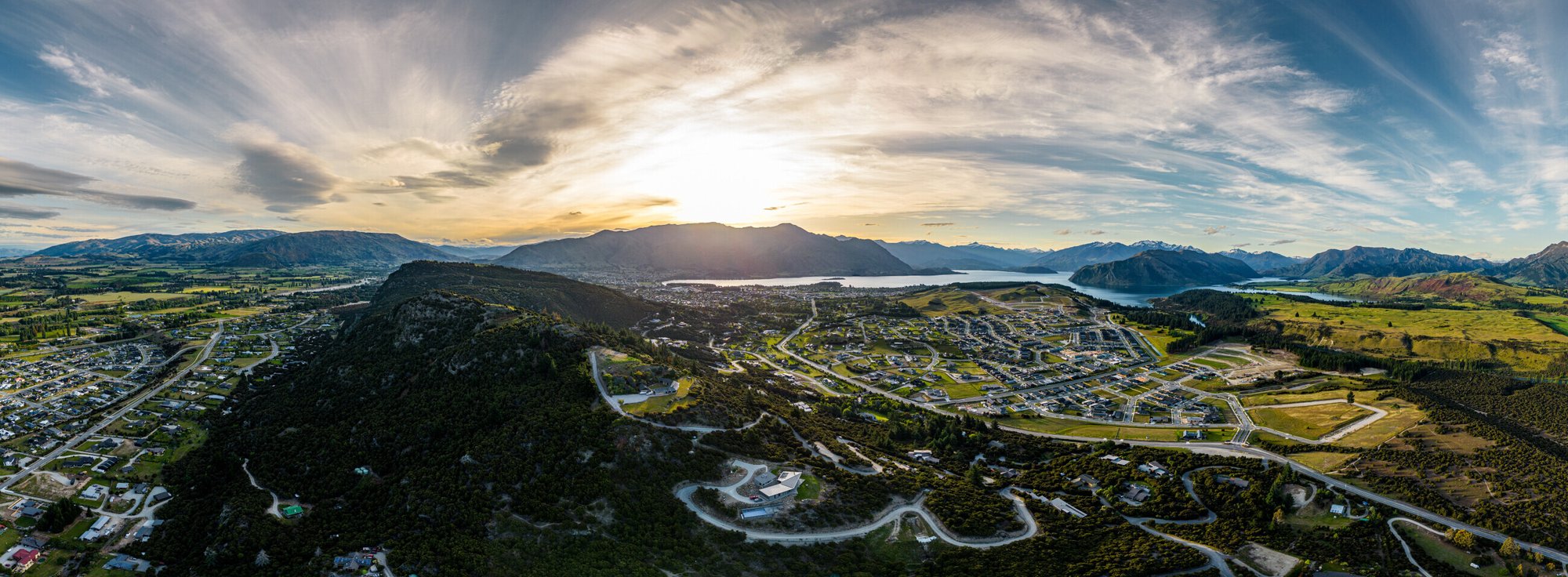
New Zealand has shown it can raise the standard of green buildings. The next challenge is ensuring development helps protect and restore nature

Twenty years ago, green buildings were viewed as a niche idea in New Zealand. But sustainability is now more firmly embedded in boardroom discussions, investment decisions, design briefs, construction practices and building management.
This progress did not happen by accident. It was driven by thousands of people who believed our homes, offices and communities could be healthier, more efficient and better for the environment. As we mark our 20th anniversary at the NZGBC we have the opportunity not only to celebrate how far we've come, but to widen our focus and consider what comes next.
NZGBC has released a discussion paper examining the relationship between nature and the built environment. It looks at the effects of development from an individual site through to wider supply chains, and at the opportunities available through planning, design, construction, procurement and investment.
It does not present a finished New Zealand roadmap, and we are not suggesting we need to import a framework form elsewhere. We want to understand what is already working in New Zealand, if existing tools provide enough support, where the sector can make the greatest difference and what the barriers are preventing further progress. We also want to hear where government action is needed and what business are prepared to do without waiting for regulation.
Priorities for our first 20 years included:
• Driving best practice
• Inspiring the sector
• Pushing for policy change
We pushed for better homes and buildings by developing tools such as Green Star Buildings, Green Star Communities, Green Star performance, NABERSNZ and Homestar.
This has been hugely successful – with 5.5 million square metres of commercial property now covered by green certification. There are more than 16,000 Homestar homes built, with hundreds of people receiving relevant professional training courses every year.
• Of commercial buildings valued over $10m, 79% of office buildings since 2007 are Green Star rated and 40% of all buildings Green Star rated
• There are more than 16,000 Homestar homes
• That’s $50bn worth of projects overall
This success demonstrates a level of market acceptance around green buildings from our large commercial property investors, the building and construction industry, designers, architects and engineers. Banks increasingly see the benefit of ratings and certifications when it comes to sustainable lending practices.
Efficient, well-built and sustainable buildings are widely recognised as simply being better – attracting higher rents and better tenants.
With this level of maturity reached over our first 20 years, now is a perfect time to review improve at how we shape our approach to building with nature.
A wider look
Our built environment is where we live, work, play and learn. It shapes our lives and is a major driving force in our economy.
We have made significant steps in our understanding of energy performance and decarbonisation of buildings as part of climate change mitigation, but the built environment also has a significant role to play in ensuring the health of the very natural systems it relies on, both here in New Zealand and globally.
New Zealand currently has a ‘nature negative’ economy - our economic activities are degrading and depleting nature at unprecedented rates.
Despite all the efforts over the past 20 years, biodiversity, a key indicator for nature change, continues to decline, with 63% of New Zealand ecosystems currently threatened. More than 75% of indigenous species in reptile, bird, bat, and freshwater fish species groups are threatened with extinction or are at risk of becoming threatened.
Our new discussion paper released: “Building with Nature: the role of the built environment in connecting with, protecting and enhancing nature”
reviews the impacts the built environment has on nature - from site-level to far-reaching effects along global supply chains - and considers what actions we can take to move from nature negative towards a nature positive future.
Through this work, we are seeking to advance the conversation about the role our sector can play in the shift from a ‘nature negative’ trajectory toward a ‘nature positive’ future.
Accompanying this new discussion paper is a survey, where we seek to better understand our sector’s view of the challenge.
The paper identifies some of the opportunities for developers, professionals, and built environment professionals to protect and enhance nature through planning, design, construction, procurement and investment, and highlights examples of great leadership already underway in New Zealand
Scaling up efforts to protect and enhance nature both in New Zealand and around the world will take a shared vision and collective effort.
Some frameworks and plans already exist, and several are outlined in the paper.
We want to understand what the built environment sector thinks is important. What could we adopt? What would best practice look like in the New Zealand context?
The purpose of this discussion paper is not to present a finished roadmap but to start talking about what building with nature could mean for New Zealand and what role NZGBC could play in supporting industry to achieve it.
Survey themes include:
• Which barriers most limit progress on nature-positive outcomes, to what role NZGBC should play?
• Are existing tools and frameworks providing enough support for nature outcomes?
• What actions from government would have the greatest impact?
• What actions could industry take now without waiting for policy or regulatory change?
The Australian experience
After several years of consultation and development, our partner organisation the Green Building Council of Australia GBCA worked with a similar range of stakeholders to develop its “Nature positive roadmap for the built environment: Trajectories for new developments.”
This details a framework for action based around five principles and sets a series of targets for today and out to 2050 and beyond. While this Roadmap was developed for the Australian environment, some of it may be appropriate for New Zealand use.
The five principles of its nature positive roadmap are:
1. Prevent nature loss
This sets a pathway from today’s planning controls to full protection of valuable natural systems onsite by 2050.
2. Increase and connect nature
This sets a clear pathway from minimising impacts today to achieving at least a 10% biodiversity net gain (BNG) by 2035, with a strong emphasis on onsite gains and ecological connectivity.
3. Drive circularity
This outlines a shift from waste minimisation today to a measurable increase in circularity across both the sector and individual projects by 2050.
4. Choose low-impact materials
This focuses on shifting material choices and supply chains toward ethical, traceable, and nature regenerative outcomes
5. Invest in nature
This sets a path from baseline investment to consistent, outcome-driven restoration funding.
Other suggested action
While cohesive planning and environmental legislation, regulation and systems are some of the biggest levers we have for protecting our environment, we don’t need to wait for a perfect system to have a positive impact on nature.
One of the most effective ways we can act today, is to use trusted, independent rating tools and frameworks that help us understand how our choices are impacting nature and to do measurably better.
Organisations can also consider how to measure and mitigate impacts on nature more strategically, including investing in nature and committing to nature-related disclosures.
As we celebrate 20 years of progress, it is worth reflecting on how far New Zealand's built environment has come. What once seemed ambitious is now increasingly standard practice.
Green buildings are delivering healthier, more efficient places for people while helping reduce environmental impact. The challenge before us now is to apply that same mahi and innovation to protecting and restoring nature.
If the first twenty years were about proving change was possible, the next twenty years should be about looking for ways to ensure that development and nature can work together.